



Explore our fragrances and add your favourites here.
Continue shopping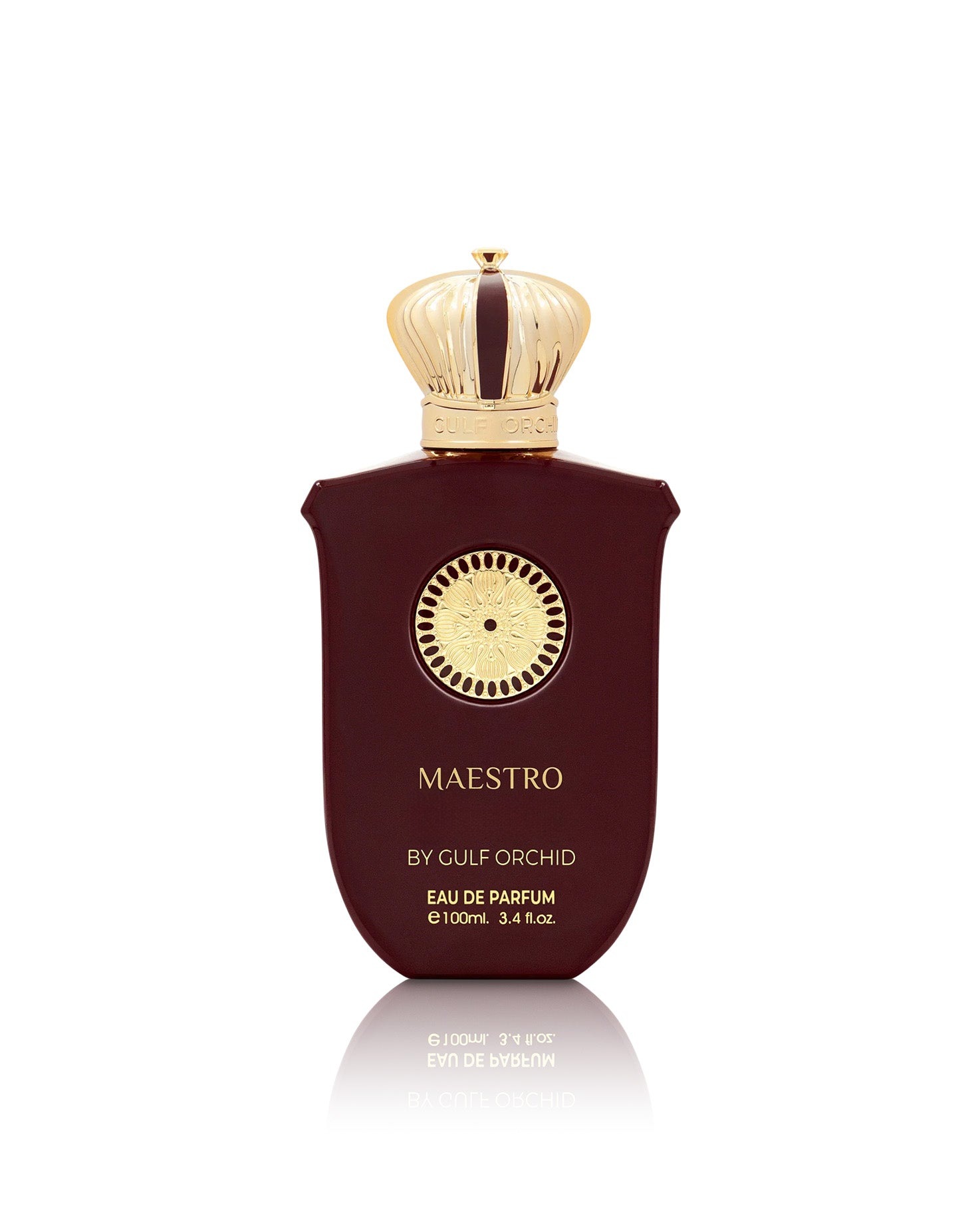
GULF ORCHID
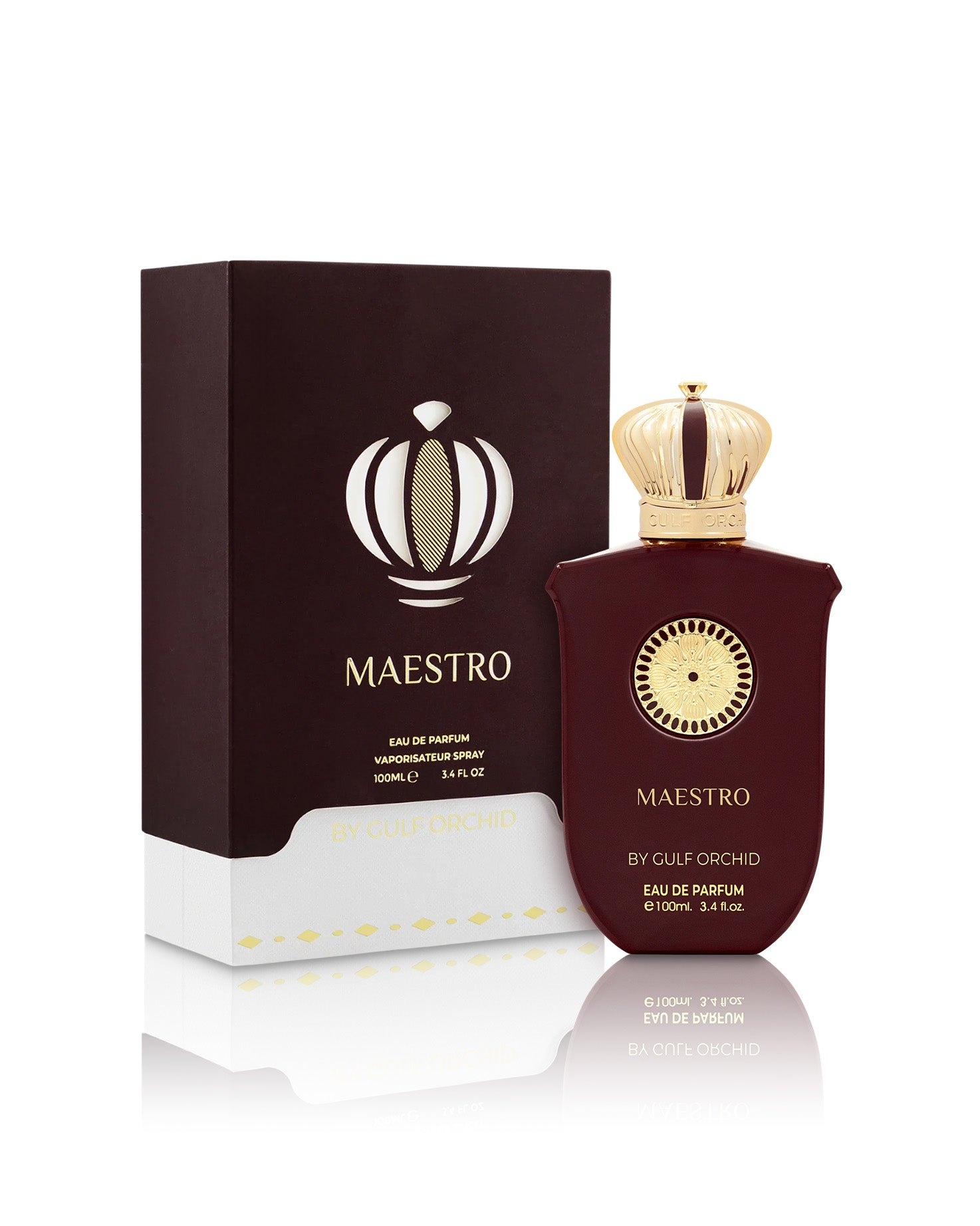
MAESTRO Edp
UNISEX34,49 €
Tax included. Shipping calculated at checkout.
100% Authentic14-Day ReturnsSecure Payment
Main Accord
Description
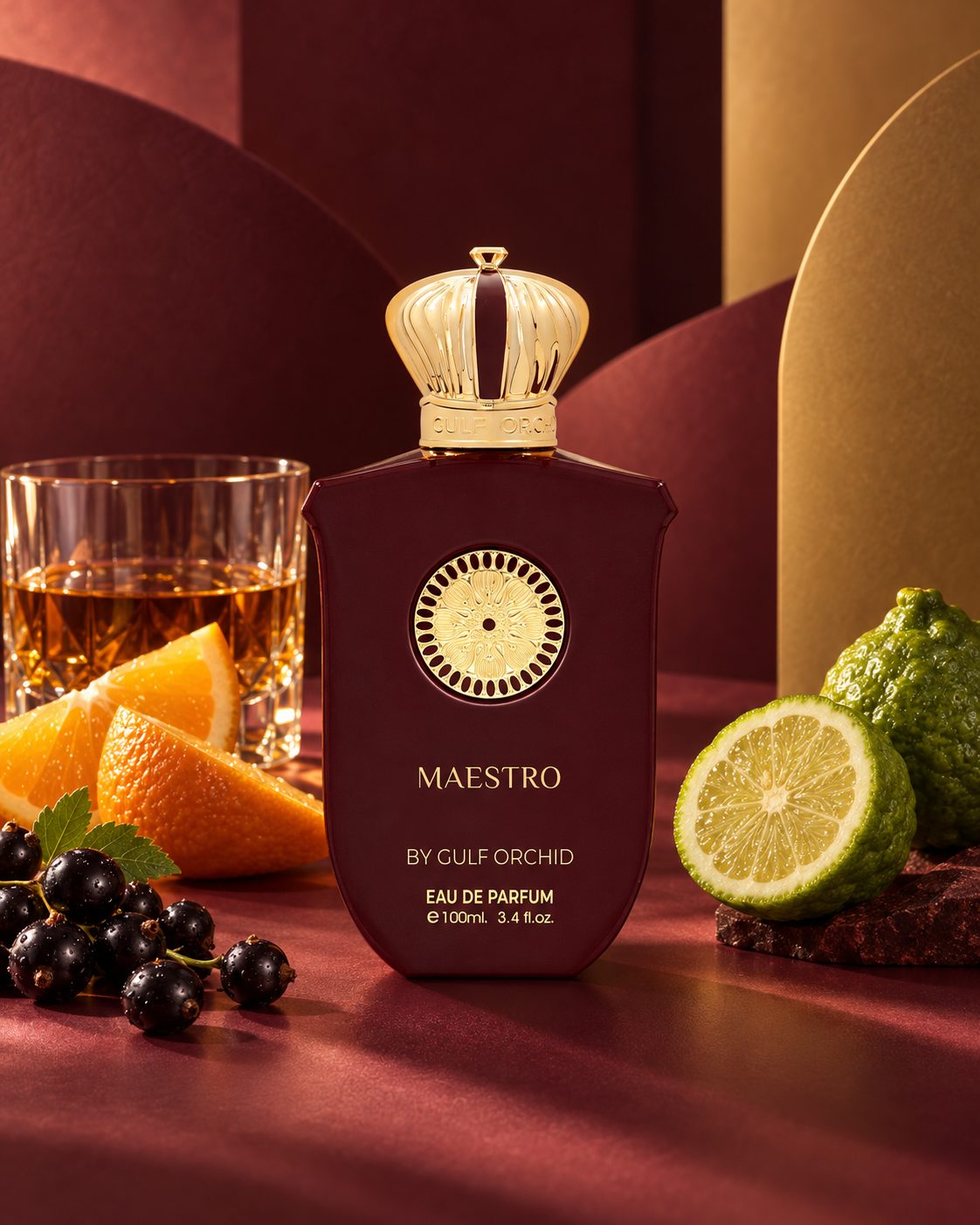
- TOPBlack Currant, Liquor, Orange, Bergamot
- MIDDLEAmber, Leather, Rose
- BASEPatchouli, Vanilla, Musk, Sandalwood
Gulf Orchid Maestro EDP: Liqueur Fruit Giving Way to Smoky Leather
Gulf Orchid released Maestro in 2026 as an eau de parfum built around two halves that do not look alike. One is a dark, liqueur-tinged fruit opening, the other a leather heart. It is a fragrance for people who want both and are willing to accept a change of direction partway through the wear.
Gulf Orchid Maestro Fragrance Notes
- Top Notes: Black Currant, Liquor, Orange, Bergamot.
- Middle Notes: Amber, Leather, Rose.
- Base Notes: Patchouli, Vanilla, Musk, Sandalwood.
Fruit and alcohol come first, then amber and leather, and finally wood and sweetness. Each of the three stages is easy to recognise, and they do not blend into a single note.
The first hour, step by step
Blackcurrant leads, tart and deep, and liqueur adds a warm, almond-sweet richness beside it. Orange and bergamot keep the start lively so it never feels heavy. For a short stretch it behaves like a boozy fruit gourmand and nothing more.
Then the citrus recedes and amber begins to warm underneath. Leather follows and settles in. Rose sits beneath it and softens the edges, so the smoke never turns sharp. This is the stage Maestro spends most of its time in, and it is where the name starts to make sense.
The turn from fruit to leather is the main thing to weigh before buying. Anyone who came for the fruit may find the smoke unexpected, and anyone who came for leather may find the start sweeter than they hoped.
How the leather is made
There is no leather extract. Nobody distils a hide, and no absolute of leather has ever been produced, so every leather note in perfumery is a construction. The usual building blocks are birch tar, quinolines and suede-type molecules. Birch tar brings a tarry smokiness, and quinolines add the dry, bitter edge that suggests a tannery.
The note itself grew out of a trade. Glovemakers in Grasse scented their hides to cover the smell of tanning, and over time that work became the perfume industry the town is known for. In other words, Grasse learned perfumery partly because it needed to disguise leather.
The leather in Maestro is at the gentler end of that range. It is lightly smoky, and the fruit above it complements it rather than competing.
Why a rest makes a difference
Maestro can improve with time. Maceration is the term for what goes on inside a bottle once it has been filled. Aromatic materials and alcohol are still settling when it leaves the factory, so the molecules keep spreading out and interacting for weeks.
Perfumers see the same pattern again and again: the sharper top notes mellow, the joins smooth out, and the blend feels more unified. Right after bottling, the scent tends to come across as harsher and boozier.
This one gains from that resting period, since the switch from liqueur to leather can feel abrupt at first. A little time softens the join between the two.
What the base contributes
The drydown leans towards patchouli and sandalwood, and vanilla stays in the background. The result is a warm, woody base. Musk keeps it all near the skin in the final hours, and the fruit never quite leaves, even in a blend this dark. Every so often the liqueur comes back through the wood.
Staying power and projection
Maestro lasts. Patchouli, sandalwood and musk are among the slowest-evaporating materials available, so the structure holds its shape for hours. Fabric keeps a composition like this far longer than skin does, so clothing will carry it well past the evening.
Projection matches the longevity, so it is not a quiet scent. A few sprays are plenty for an evening. Cooler seasons are when it comes into its own, since its woody, ambery drydown opens up in colder air.
Men, women or unisex
Gulf Orchid lists Maestro for women and men, and many retailers sell it as unisex. Some market it squarely at men, a choice that says more about positioning than about the blend itself. The composition supports the unisex reading. By convention, rose and blackcurrant read as feminine notes and leather with patchouli as masculine ones, and here the two sides share the stage evenly.
Who it suits
Buy Maestro if:
- You want fruit and smoke together. Not many scents attempt that pairing, and this one follows through on both.
- You mostly wear scent after dark or in the chill. Its woody, ambery drydown suits low temperatures.
- You are willing to wait for a new bottle to settle. A few weeks of rest helps.
Skip Maestro if:
- Smoke puts you off. The leather comes early and lingers, and the fruit does little to soften it.
- Light, workplace-friendly scents are what you want. This is not one.
- You hoped the fruit would carry through to the end. It fades out quickly and does not come back.
Maestro is a dark, leathery scent for anyone who wants to arrive deliberately rather than quietly.
More from GULF ORCHID
-
GULF ORCHID


MANGO ICE Edp
Price range: 3,00 € through 34,49 € -
GULF ORCHID
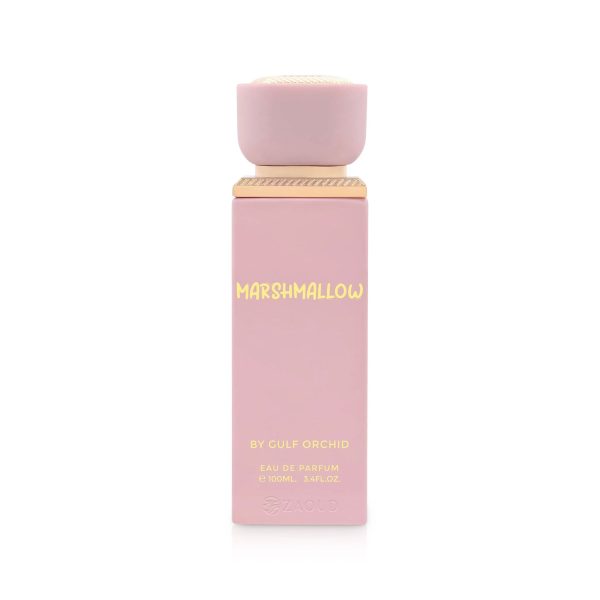

MARSHMALLOW Edp
Price range: 3,00 € through 34,99 € -
GULF ORCHID
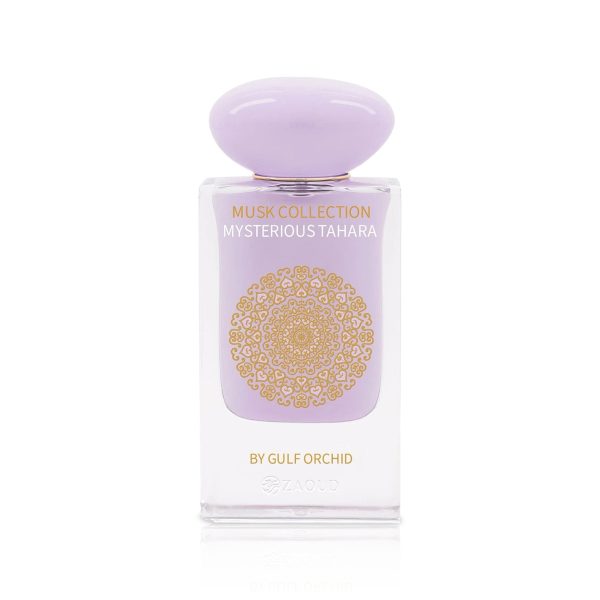

MYSTERIOUS TAHARA Edp
Price range: 3,00 € through 35,00 € -
GULF ORCHID
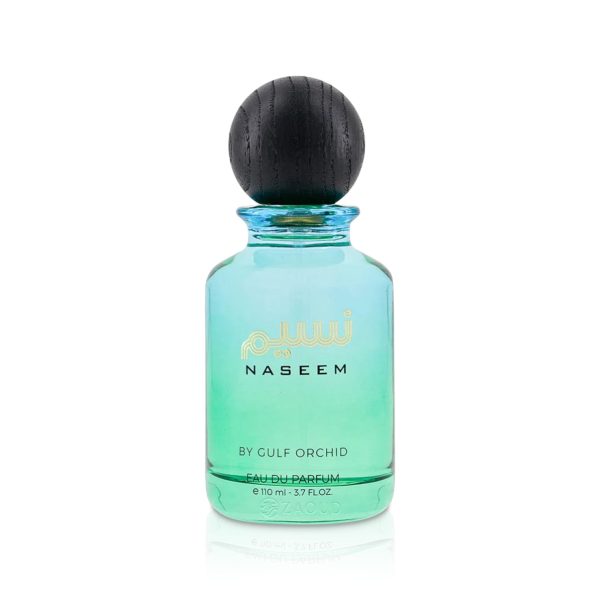

NASEEM Edp
Price range: 3,00 € through 24,99 € -
GULF ORCHID
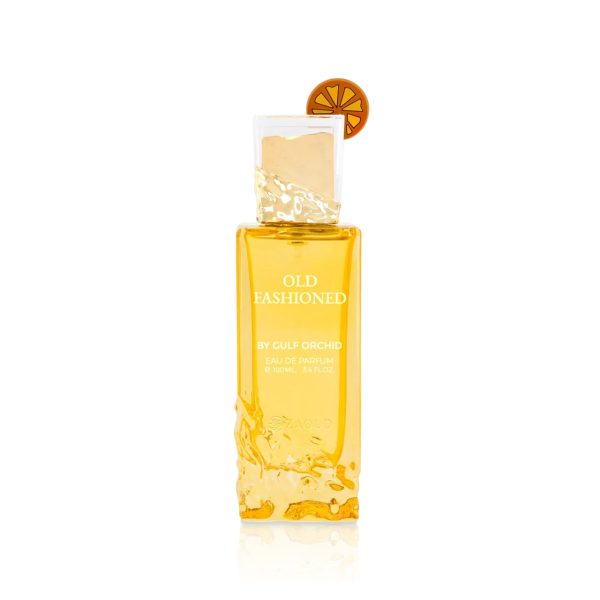

OLD FASHIONED Edp
Price range: 3,00 € through 29,99 € -
GULF ORCHID
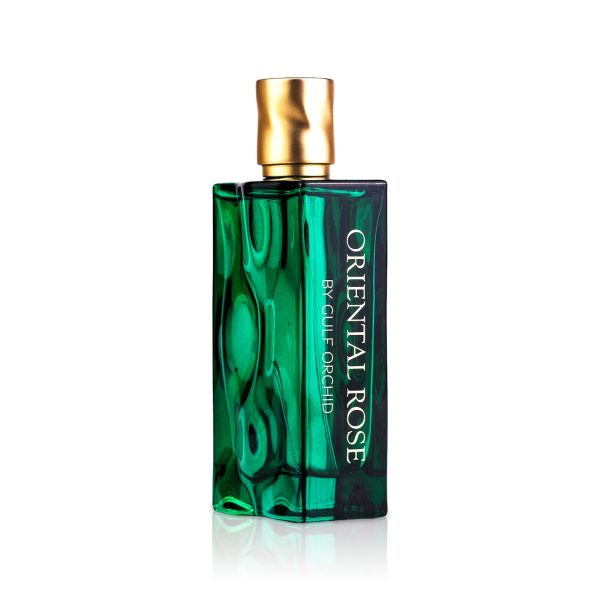

ORIENTAL ROSE Edp
Price range: 3,00 € through 29,69 € -
GULF ORCHID
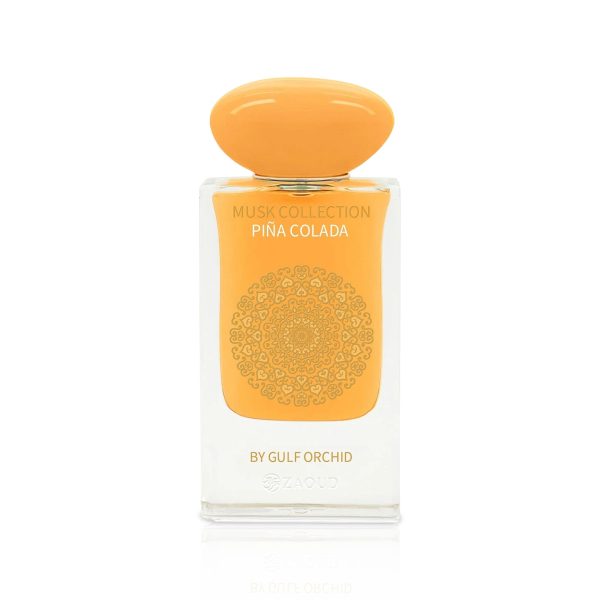

PINA COLADA Edp
Price range: 3,00 € through 35,00 € -
GULF ORCHID


POMEGRANATE Edp
Price range: 3,00 € through 32,00 €