




Explore our fragrances and add your favourites here.
Continue shopping

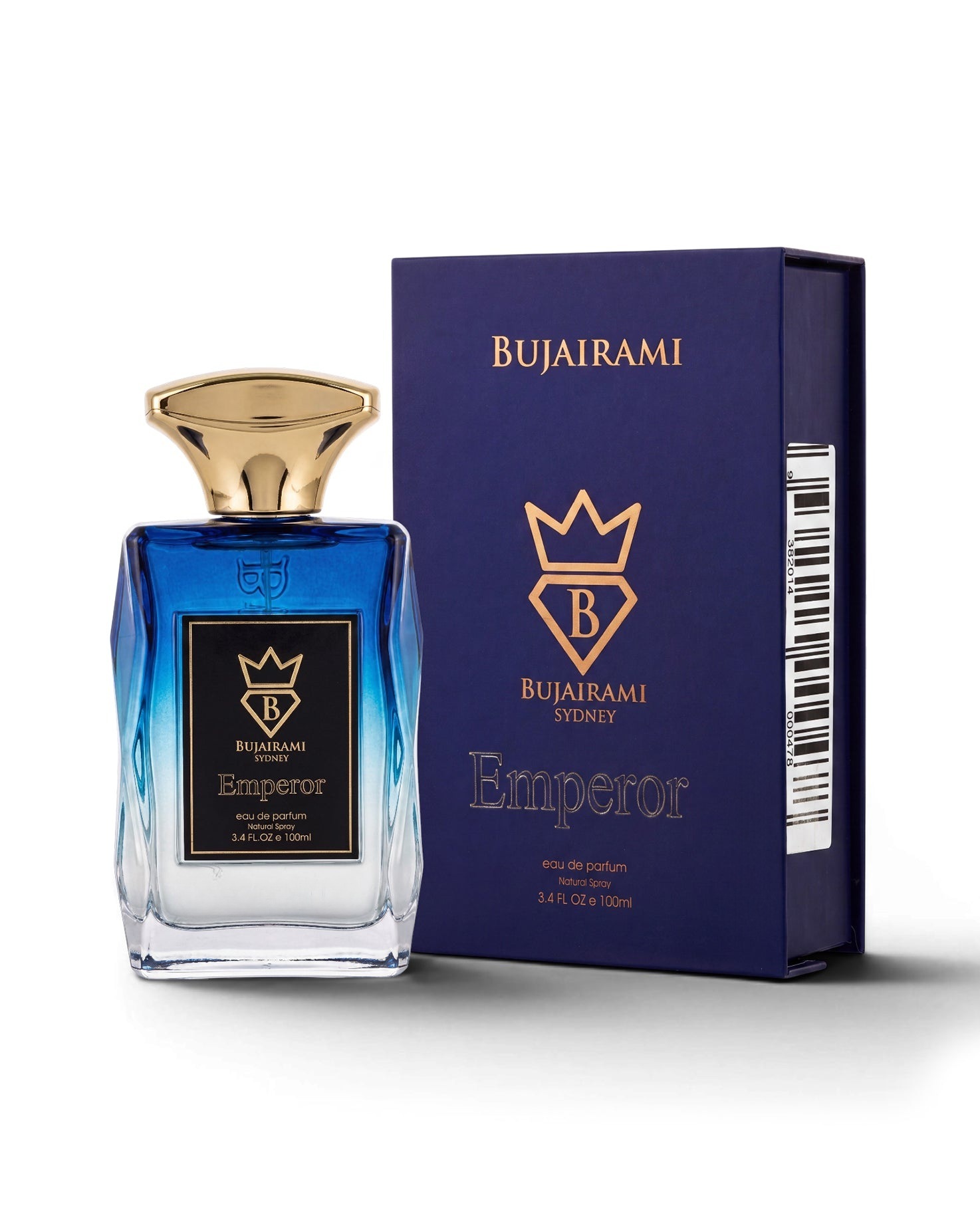
BUJAIRAMI
EMPEROR Edp
UNISEX45,00 €
Tax included. Shipping calculated at checkout.
100% Authentic14-Day ReturnsSecure Payment
Main Accord
Description
- TOPGrapefruit, Apple, Bergamot, Black Currant
- MIDDLEGinger, Cinnamon, Lily of the Valley, Citron, Jasmine, Cardamom
- BASEAmbergris, Pink Pepper, Cashmere, Patchouli, Vetiver
Bujairami Emperor Eau de Parfum: Grapefruit and Spice Where Pineapple Used to Be
Emperor suits anyone who loves the smoky-fruity masculine style but wants a different ending to the story. The pineapple that defines that style is missing here. Grapefruit and apple take its place, and a warmer, spicier heart follows. This is a 100 ml eau de parfum from the Sydney-based house of Bujairami, and its character is steady presence rather than a grand entrance.
Bujairami Emperor Fragrance Notes
- Top Notes: Grapefruit, Apple, Bergamot, Black Currant.
- Middle Notes: Ginger, Cinnamon, Lily of the Valley, Citron, Jasmine, Cardamom.
- Base Notes: Ambergris, Pink Pepper, Cashmere, Patchouli, Vetiver.
What Replaced the Pineapple
The model this fragrance reinterprets leads with pineapple, and blackcurrant and birch smoke sit alongside it. Emperor keeps the blackcurrant but builds its opening around grapefruit and apple, then layers ginger, cinnamon and cardamom into the heart. The outcome is a warmer, more refined take on the genre rather than a copy of its best-known example.
Pink pepper is a good illustration of the reasoning. In most fragrances it opens with a rosy crackle. Here it sits deeper, beneath ambergris, patchouli and vetiver, and acts as a lift rather than a spark. Its job is to stop the heavy drydown from feeling dense and airless.
A Heart With Six Voices
The middle layer carries more weight than usual. Where many compositions crowd the top and let the heart hold two or three materials, Emperor fills the heart with six. Ginger, cinnamon and cardamom bring the warmth, while jasmine, lily of the valley and citron provide the lift. Since most of the wear happens here, this is the stage that deserves your judgement.
Lily of the Valley, Reconstructed
Lily of the valley, known botanically as Convallaria majalis, is a small white spring flower whose scent is among the most instantly recognised in perfumery, yet no usable extract exists. Perfumers describe flowers like it as mute, because distillation and solvent extraction fail to capture the aroma in workable amounts. Every note of it is therefore a reconstruction.
Recent rules have made rebuilding it more demanding. Lyral was banned from European cosmetic perfumery in August 2021 over its allergen profile, and Lilial followed in March 2022 as a reprotoxic material. Perfumers have had to rethink their accords, so modern versions differ from those of a decade back.
Inside Emperor, the flower works on structure as much as on scent. It sits among five other heart notes and brings a clean, green, dewy lift under the ginger and cinnamon. Without it, the spiced core would read heavier and closed. Most wearers will never name it, but they would miss it. Orchid, blue lily and datura follow the same pattern: evocative on paper, built by craft rather than extraction.
From First Spray to the Last Trace
The first minutes are bright and a little bitter. Grapefruit leads with a pink, slightly tart character, apple supplies a crisp juiciness, and bergamot and blackcurrant tighten the edges. Nothing about it is sharp or sugary. It feels considered from the outset rather than like a summer splash.
By about fifteen minutes the heart opens. Ginger reads dry and fibrous, closer to root than to powder. Cinnamon follows with warm sweetness, and cardamom brings a green, peppery accent. Jasmine, citron and lily of the valley stop the spices from weighing everything down, so the middle manages to feel warm and airy together. This is the stage that lasts longest.
The base settles things. Ambergris turns the scent salty, warm and close to the skin, patchouli adds a dark, earthy depth, and vetiver brings a rooty green bitterness. Cashmere softens the whole picture, and pink pepper keeps a faint brightness alive underneath. The drydown reads clean and quietly confident, and the final hours are steady rather than dramatic.
Eau de Parfum Versus Extrait
The concentration shapes the experience. Extrait carries a higher share of fragrance oil and less alcohol, so it stays closer to the skin and rewards people who are nearby. It is the wrong pick if you hope a scent reaches the room before you do.
Emperor is an eau de parfum, which means more alcohol and therefore more push. A grapefruit and spice opening suits that push well, so the choice reads as purposeful rather than thrifty. In a room, its presence is what others catch as they move past.
Who It Suits
It is a good match if:
- You like smoky-fruity masculines but find the classic one predictable. Emperor offers a spicier, richer reading that fewer people around you are likely to wear.
- You want a fragrance that moves from daytime brightness to evening weight. The grapefruit and apple open the day, and the ambergris and vetiver base carry it into the evening.
- You enjoy the house’s skin-close fragrances and want a more outward-facing option from the same range. Paired together, the two cover most of a week.
It may not suit you if:
- You are looking for the pineapple opening. It is absent here, and wearing the bottle will not change that.
- Cinnamon and ginger feel harsh on your skin. The middle layer alone includes six materials, and about half are warm spices, so test it first.
Wear Time and Application
The structure gives it a solid base. Ambergris, patchouli, vetiver and cashmere evaporate slowly, so the bright citrus opening has firm support beneath it. Eau de parfum strength helps it project as well as last.
For best results, spray three or four times on the pulse points and collar. The opening settles into the spiced heart in about fifteen minutes, so judge it after that shift, not at the first spray. A fresh bottle can read sharp at the start, so give it a couple of weeks. Spring through autumn suits it best.