

Explore our fragrances and add your favourites here.
Continue shopping


NUSUK
GHAZAL EXdp
WOMEN22,49 €
Tax included. Shipping calculated at checkout.
100% Authentic14-Day ReturnsSecure Payment
Main Accord
Description
- TOPMandarin Orange, Lemon, Bergamot
- MIDDLERaspberry, Freesia, Jasmine, Peony, Lily-of-the-Valley
- BASESandalwood, Musk
Nusuk Ghazal Extrait de Parfum: Airy Florals for Bright, Everyday Wear
For someone who prefers a gentle floral fragrance during working hours, Ghazal offers a lighter direction within the Arabian perfume wardrobe. Citrus brightness leads into a soft bouquet, with a warm, clean base. This 100 ml extrait de parfum is marketed towards women, although men who enjoy fruity florals may also find it appealing.
Its restrained character makes it a natural option for daytime, spring and summer. If you usually choose dense amber or rich oud, this style may feel delicate by comparison. For a floral wearer, that same softness can make it an approachable gift.
Know which Ghazal you are choosing
The house name matters here. Nusuk’s perfume and a women’s fragrance named Ghazal from Blend Oud are separate releases. Searching by the fragrance name alone can lead to information about the other product, so check the brand before comparing descriptions.
The published pyramid below is the clearest guide to this version: a citrus opening, a floral and fruit heart, and a foundation of sandalwood with musk. Similar names on other fragrances do not make their notes interchangeable.
A citrus opening and a soft floral centre
The published notes are listed by European distributors in two countries rather than an official Nusuk fragrance specification. They describe a clean, fruity-floral direction supported by soft woods and musk.
Ghazal Fragrance Notes
- Top Notes: Mandarin Orange, Lemon, Bergamot.
- Middle Notes: Raspberry, Freesia, Jasmine, Peony, Lily-of-the-Valley.
- Base Notes: Sandalwood, Musk.
The overall progression follows a familiar fruity-floral pattern. Lemon and bergamot provide the brighter citrus impression, with mandarin adding roundness. The opening is described as clean and fresh, followed by an airy floral centre and a softer musky finish.
Jasmine gives the heart a recognisable floral presence. Peony and freesia are described in dewy, gently green terms, while raspberry introduces a fruit accent without making the whole composition heavily sweet. The result is presented as a polite floral rather than a forceful, dense perfume.
Sandalwood and musk provide the main foundation in the printed notes. Their clean warmth supports the softer direction of the fragrance, letting the floral impression remain central as the brighter opening recedes.
Understand what floral notes can describe
A fragrance note is not always a direct extract of the named flower or fruit. Peony, freesia and lily of the valley belong to the group traditionally called mute flowers, or fleurs muettes. The term, dating to the eighteenth century, refers to plants whose fragrance cannot be obtained as a usable conventional perfume extract despite their scent in nature.
Other examples include lilac, hyacinth, carnation, honeysuckle, violet, gardenia and sweet pea. The issue is extraction rather than an absence of fragrance: traditional processes may yield wax and water without preserving a usable scent material.
Freesia and peony are represented through constructed accords. The raspberry effect is also described through perfumery materials such as synthesised raspberry ketone rather than a direct fragrance extract of the fruit. Those note names convey an olfactory intention, not a complete disclosure of ingredients.
A peony impression can be assembled from several complementary materials. Rosy materials including geraniol, linalool, citronellol and phenylethyl alcohol can provide its foundation, with ionones contributing powder and cyclamen aldehyde adding freshness. Peonile, introduced in 1976, is cited for a metallic nuance. This is background on perfumery, not a claim that Ghazal contains every material described.
Headspace analysis has helped perfumers study living flowers since the 1980s. Air collected around a bloom can be analysed to identify its emitted scent components. That provides a reference for reconstruction without extracting the flower itself.
Let your own impression guide the choice
Constructed floral accords leave considerable room for interpretation. Unlike a named natural material with a recognisable reference, a peony impression can vary widely between fragrances. Two perfumes listing the same flower may therefore feel quite different on skin.
Use Ghazal’s pyramid to understand the intended family, then judge how its citrus, fruit and flowers work together. The combination is conventional enough that balance and texture matter more than novelty. It is likely to appeal most to someone seeking clean florals with a softly warm foundation.
Published retail descriptions suggest six to eight hours of wear with moderate projection. Treat that as an estimate rather than a guaranteed result. Extrait concentration alone cannot guarantee that result: airy flowers and citrus have a different character from the musk and sandalwood that anchor the finish.
More from NUSUK
-
NUSUK
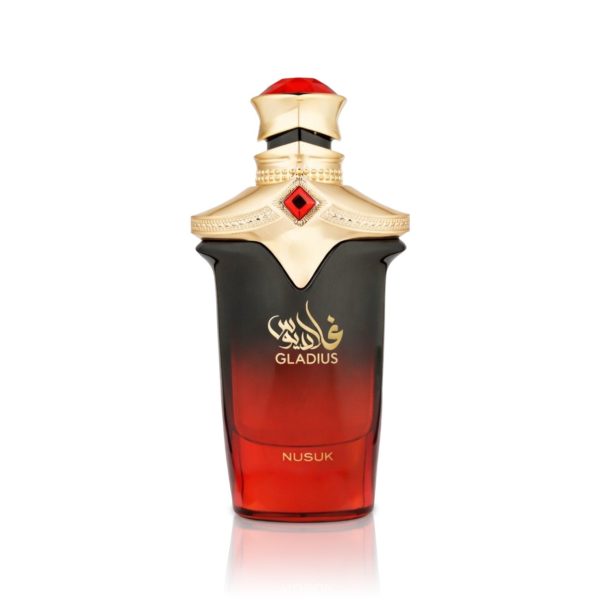

GLADIUS EXdp
Price range: 3,00 € through 34,00 € -
NUSUK

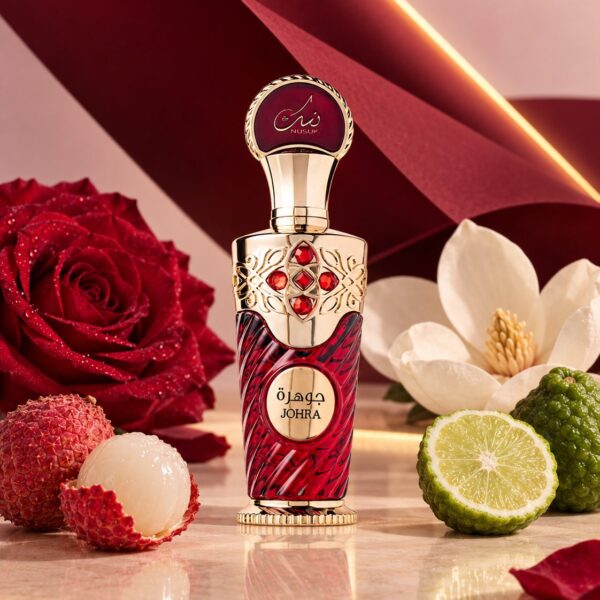
JOHRA EXTRAIT DE PARFUM
Price range: 3,00 € through 32,00 € -
NUSUK
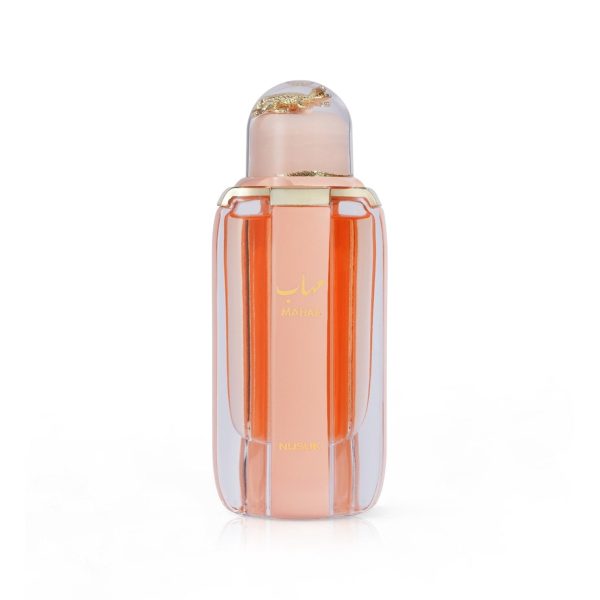

MAHAB EXdp
Price range: 3,00 € through 34,99 € -
NUSUK
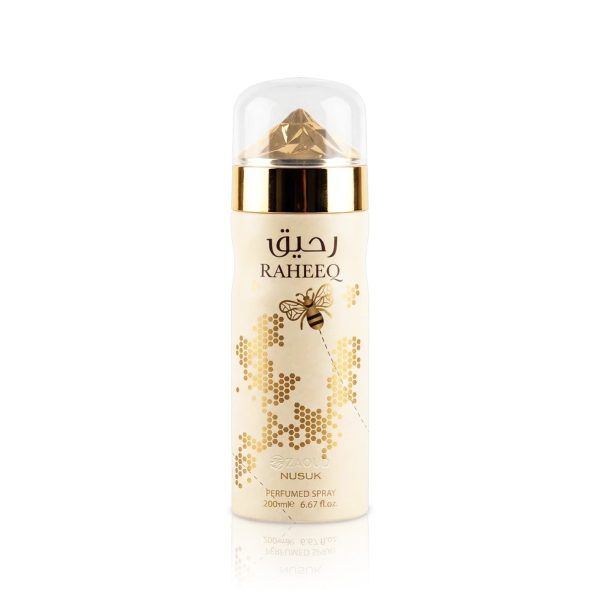
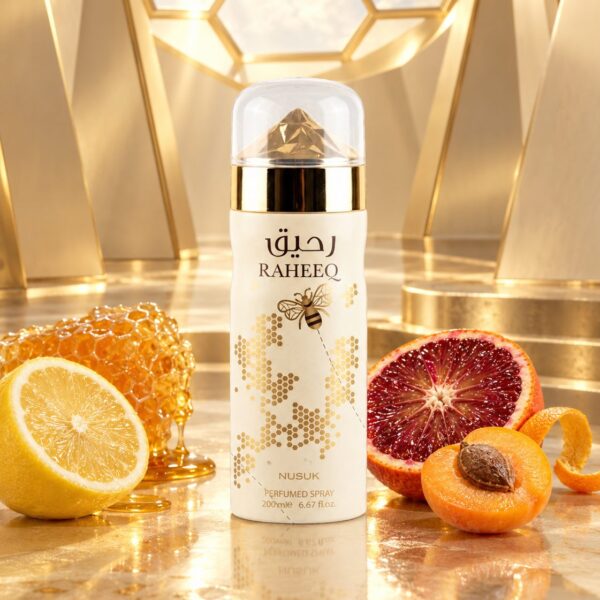
RAHEEQ Deodorant Body spray
6,50 € -
NUSUK
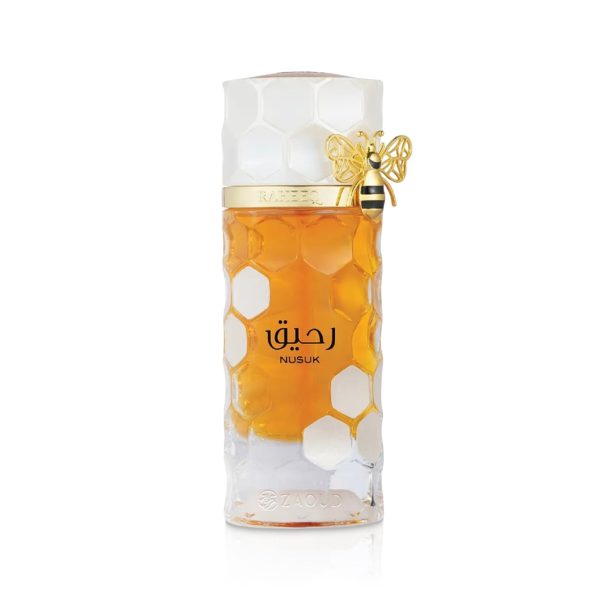
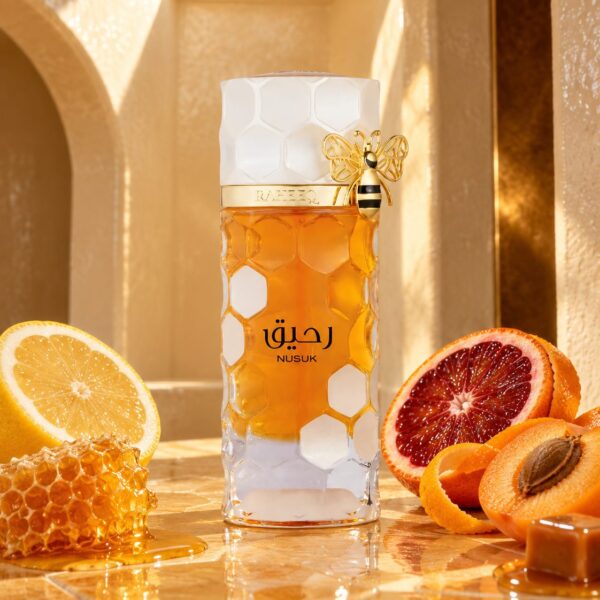
RAHEEQ EXdp
Price range: 3,00 € through 27,99 € -
NUSUK
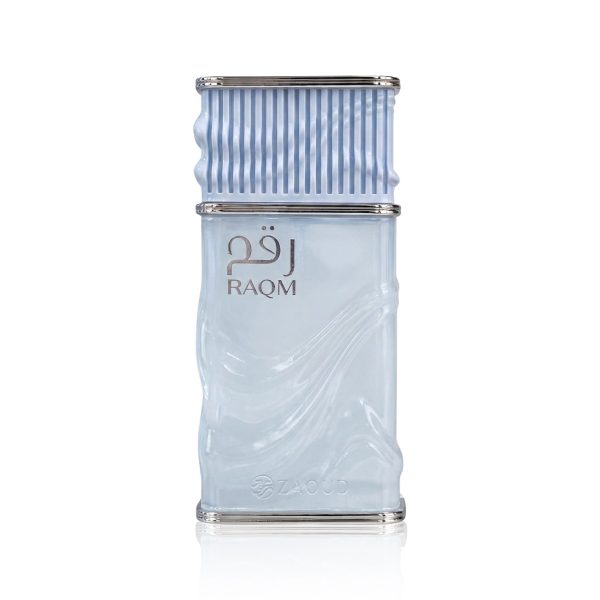

RAQM EXdp
Price range: 3,00 € through 37,89 € -
NUSUK
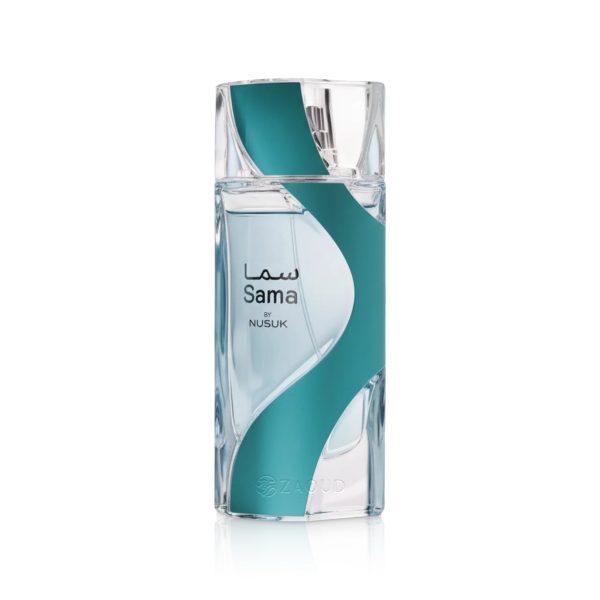
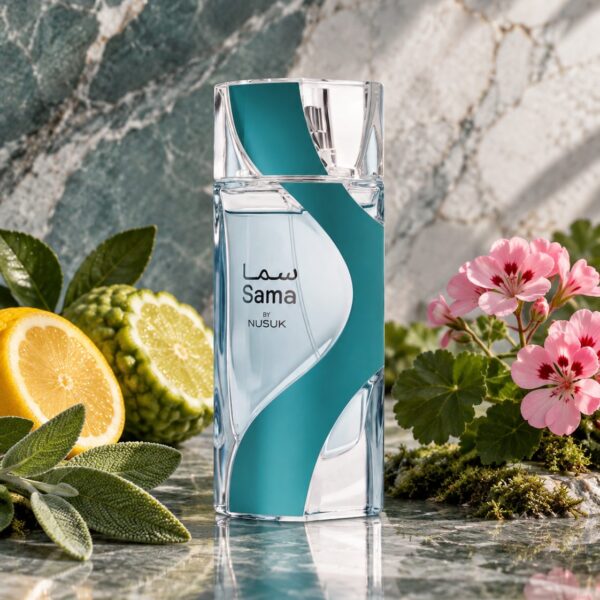
SAMA Edp
Price range: 3,00 € through 24,89 € -
NUSUK
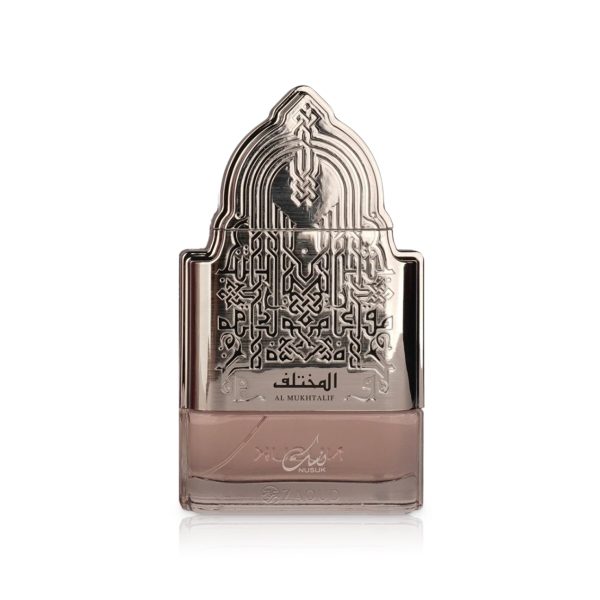
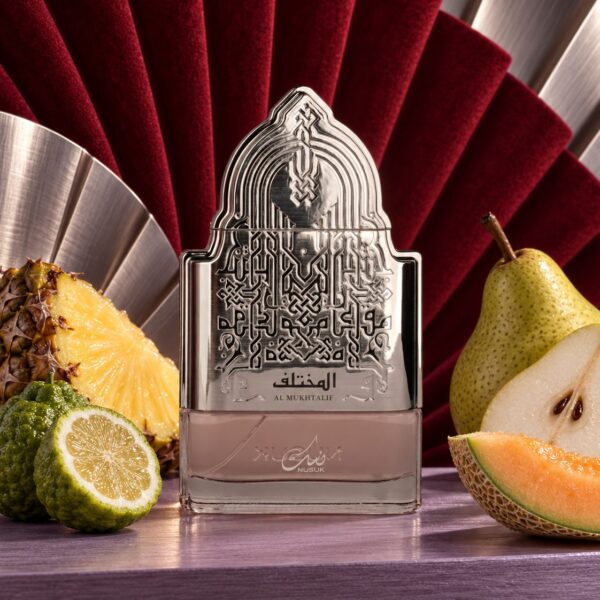
AL MUKHTALIF Edp
Price range: 3,00 € through 32,00 €